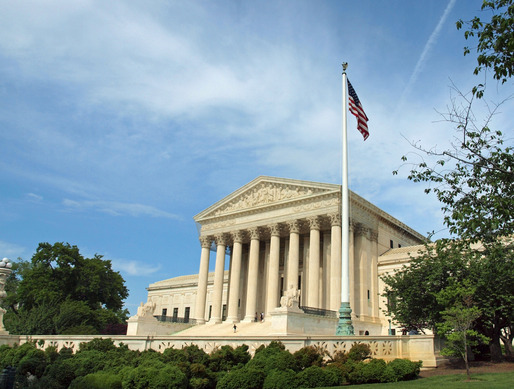
The Supreme Court (SCOTUS) ruled 8-1 in a recent decision against popular retailer Abercrombie & Fitch (Abercrombie) in a discrimination case brought by the Equal Employment Opportunity Commission (EEOC) on behalf of a Muslim teenager. The case stemmed from the company rejecting 17-year-old Samantha Elauf’s job application after she wore a headscarf to her interview.
 Admin
Patterson v. Domino’s Pizza, LLC: Franchisor Not Liable As An “Employer” For Sexual Harassment By Franchisee Employee
by Sayema Hameed
Is a franchisor liable for the wrongful acts of a franchisee employee? The short answer is, “It depends.” The longer answer involves an analysis of whether the franchisor demonstrates the characteristics of an “employer” under California law.
In a recent case, Patterson v. Domino’s Pizza, LLC (Cal. Sup. Ct. Case No. S204543, filed August 28, 2014), the California Supreme Court held that a franchisor, Domino’s Pizza, LLC, did not satisfy the criteria to be deemed an “employer” and was, therefore, not vicariously liable for alleged sexual harassment by a franchisee employee (a male supervisor) against another franchisee employee (a female subordinate employee).
Specifically, the franchisor here was not involved in the day-to-day decisions involving hiring, supervision, and discipline of the employees, and nothing in the franchise agreement contractually required or allowed the franchisor to make or control such employment decisions.
California Expands Whistleblower Protections and Anti-Retaliation Provisions
by Sayema Hameed
In October 2013, California Governor Jerry Brown signed into law Senate Bill 666, Assembly Bill 263 and Senate Bill 496 to expand whistleblower protections and anti-retaliations provisions in California. These three bills address whistleblowing, immigration status and claims regarding unpaid wages. These bills also confirm that whistleblowers are not required to exhaust administrative remedies to pursue a civil cause of action for whistleblower retaliation. These significant changes in the law took effect on January 1, 2014.
California Expands Paid Family Leave Program
by Sayema Hameed
On September 24, 2013, California Governor Jerry Brow signed into law Senate Bill 770 to expand California’s Paid Family Leave program by allowing workers to receive benefits while caring for seriously ill grandparents, grandchildren, siblings and in-laws.
An Overview of California’s Disability Insurance (DI) and Paid Family Leave (PFL) Programs
by Sayema Hameed
California’s State Disability Insurance (SDI) is a partial wage-replacement insurance plan for eligible California workers. The SDI programs are state-mandated and funded through employee payroll deductions. SDI provides affordable, short-term benefits to eligible workers. Workers covered by SDI are eligible for two wage-replacement programs: Disability Insurance (DI) and Paid Family Leave (PFL).
California Governor Brown Signs SB 292 To Amend FEHA: Sexual Desire Not Necessary To Prove Sexual Harassment
by Sayema Hameed
On Monday, August 12, 2013, Governor Jerry Brown signed into law Senate Bill 292, which amends the Fair Employment and Housing Act (“FEHA”), Government Code Section 12940, to state as follows:
[blockquote]Sexually harassing conduct need not be motivated by sexual desire.[/blockquote]

Photo Credit: Pixabay
This amendment, authored by California Senate Majority Leader Ellen M. Corbett (D-East Bay), is aimed at protecting the rights of individuals who are sexually harassed in the workplace and was proposed in direct response to the Court of Appeal’s decision in Kelley v. Conco Companies (2011) 196 Cal.App.4th 191.