

On July 1, 2015, new amendments to the California Family Rights Act (CFRA) took effect. Read on to learn more about the amended regulations and how it will impact your company.
News
California Labor Commissioner Issues First Opinion On California

The California Labor Commissioner has issued its first opinion on California’s new paid sick leave law. The opinion clarifies how many hours of paid sick leave an employee is entitled to receive under the “lump sum” method of providing sick leave at the beginning of a calendar year or 12-month period.
EEOC Ruling: Title VII Prohibits Sexual Orientation Discrimination

In a recent decision, the Equal Employment Opportunity Commission (EEOC) ruled that discrimination by employers against lesbian, gay, bisexual, and transgender (LGBT) individuals is unlawful under Title VII of the Civil Rights Act of 1964.
Title VII governs employment discrimination claims against public and private employers. Under Title VII, it is illegal for an employer to discriminate against a job applicant or an employee on the basis of her race, color, religion, sex (including pregnancy), national origin, age (40 or older), disability or genetic information. While Title VII does not explicitly prohibit workplace discrimination on the basis of sexual orientation, the EEOC’s new ruling clarifies that Title VII indeed prohibits such discrimination.
Employee or Independent Contractor: The U.S. Department of Labor Weighs In

The U.S. Department of Labor recently released a memo regarding the appropriate classification of employees and independent contractors. The classification of employees has become an important topic as growing businesses such as Uber and Lyft rely heavily on the use of independent contractors, a classification increasingly challenged by workers in court. Read on to learn the factors used to determine whether a worker is an employee or an independent contractor under the Fair Labor Standards Act (FLSA).
California’s New Paid Sick Leave Law

Under the Healthy Workplaces, Healthy Families Act of 2014 (Assembly Bill 1522), over 6.5 million Californians are now eligible to take paid sick leave. This is great news for California residents who work in industries such as retail, food and beverage, and tourism. This new law requires all employers, both public and private, to offer employees at least 3 paid sick days per year. Read on to learn more about this new law and how it applies to California employers and employees.
California
Under the Healthy Workplaces, Healthy Families Act of 2014 (Assembly Bill 1522), over 6.5 million Californians are now eligible to take paid sick leave. This is great news for California residents who work in industries such as retail, food and beverage, and tourism. This new law requires all employers, both public and private, to offer employees at least 3 paid sick days per year. Read on to learn more about this new law and how it applies to California employers and employees.
The Supreme Court’s Ruling on Abercrombie’s Religious Discrimination Case
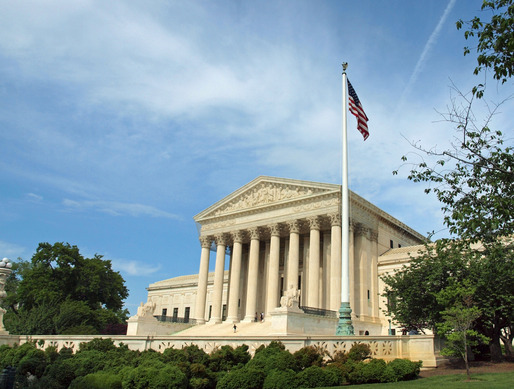
The Supreme Court (SCOTUS) ruled 8-1 in a recent decision against popular retailer Abercrombie & Fitch (Abercrombie) in a discrimination case brought by the Equal Employment Opportunity Commission (EEOC) on behalf of a Muslim teenager. The case stemmed from the company rejecting 17-year-old Samantha Elauf’s job application after she wore a headscarf to her interview.
Patterson v. Domino’s Pizza, LLC: Franchisor Not Liable As An “Employer” For Sexual Harassment By Franchisee Employee
by Sayema Hameed
Is a franchisor liable for the wrongful acts of a franchisee employee? The short answer is, “It depends.” The longer answer involves an analysis of whether the franchisor demonstrates the characteristics of an “employer” under California law.
In a recent case, Patterson v. Domino’s Pizza, LLC (Cal. Sup. Ct. Case No. S204543, filed August 28, 2014), the California Supreme Court held that a franchisor, Domino’s Pizza, LLC, did not satisfy the criteria to be deemed an “employer” and was, therefore, not vicariously liable for alleged sexual harassment by a franchisee employee (a male supervisor) against another franchisee employee (a female subordinate employee).
Specifically, the franchisor here was not involved in the day-to-day decisions involving hiring, supervision, and discipline of the employees, and nothing in the franchise agreement contractually required or allowed the franchisor to make or control such employment decisions.